Use TruComposites composite design, analysis, and manufacturing tools for hand layup and automated workflows. Learn about creating flat patterns, laser projection data, and fiber placement programming.
Features
TruComposites 2021 features
Composite design
-
Enhanced
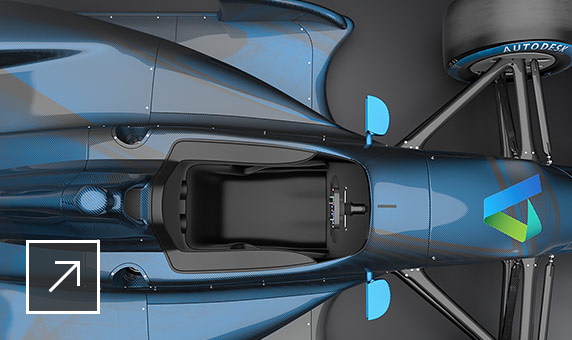
![Close-up view from above of a sleek, blue race car model with Autodesk logo]()
Surfacing and wireframe
STANDARD, ULTIMATE
Create complex composite designs with Inventor’s surface and sketch tools.
-
![Video: Import models with composite design data]()
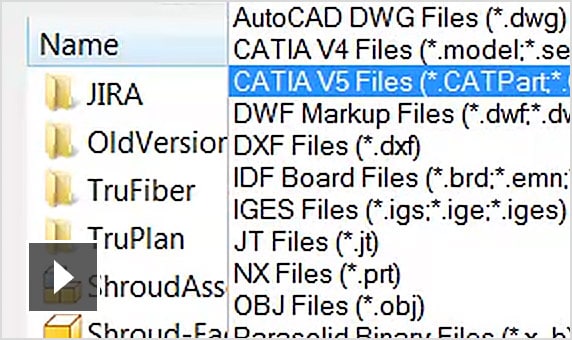
Import composite design
STANDARD, ULTIMATE
Import composite-design-rich data models from CATIA composite design and FiberSIM. (video: 1:17 min.)
-
![XML file of a flat pattern in TruComposites with Layup panel open]()
Ply layup definition
STANDARD
Define the layups, sequences, and plies that create your composite part.
-
Enhanced | Ply subdivision
STANDARD
Divide sub-plies into smaller plies and determine sub-ply overlaps automatically from splices.
-
Edit curve
STANDARD, ULTIMATE
Edit existing curves inside the composite environment using Inventor sketch tools.
-
Process material library
STANDARD
Store material parameters and packaging information in a shared library across multiple products.
Material deposition analysis
-
Enhanced
![Composite design of a manufactured part in TruPlan with Analysis panel open and Automatic Update selected]()
Manufacturing strategies
STANDARD
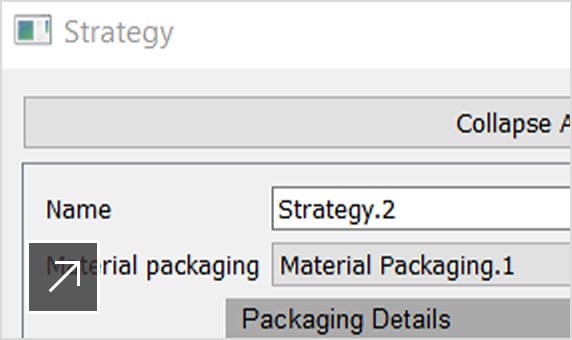
Create and analyze manufacturing strategies to compare options and lower costs.
-
![]()
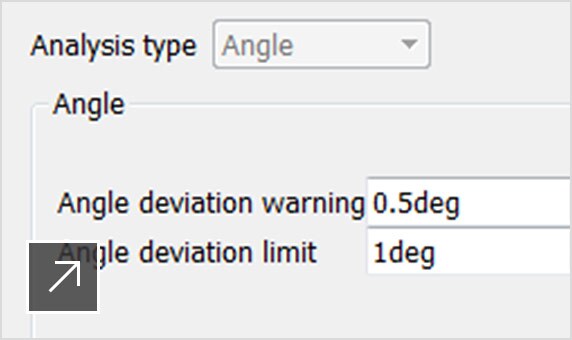
Angle deviation
STANDARD
Determine where fiber angle will be out of tolerance based on manufacturing method.
-
![]()
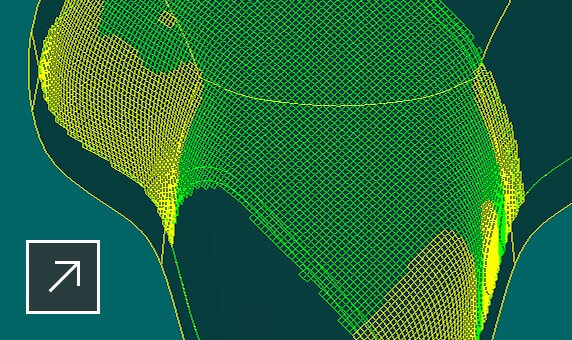
Wrinkling
STANDARD
Identify where material wrinkling will occur during the layup process.
-
Gap and overlap
STANDARD
Visualize where consecutive courses will diverge and converge passed allowed tolerances.
-
Steering
STANDARD
Identify where material minimum steering radii will influence layup quality.
-
Compaction
STANDARD
Determine where material will compact appropriate to the workpiece during the manufacturing process.
Composite manufacturing
-
Enhanced
![Composite design of the hood of a car in TruForm]()
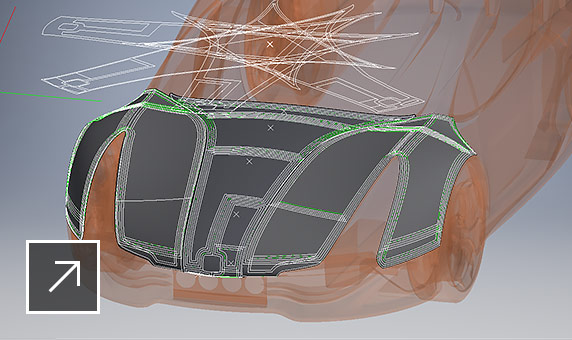
Flat pattern creation
STANDARD
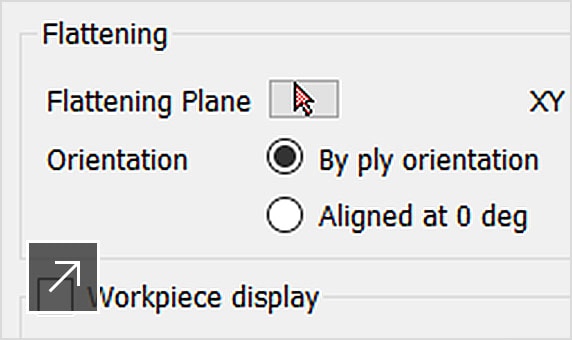
Generate 2D flat patterns from 3D surface geometry based on material properties.
-
![Green laser projection on a flat composite design in TruFiber with Laser Projection Data panel open]()
Laser projection and simulation
STANDARD
Export offset laser projection data and simulate the shop environment for laser projection optimization.
-
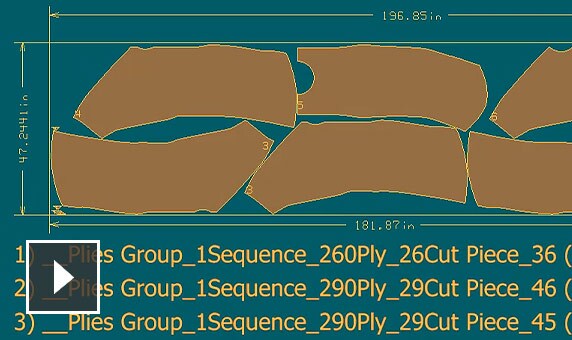
![Video: Nest flat patterns inside Inventor]()
Integration with Inventor Nesting
STANDARD
Send flat patterns directly to Inventor Nesting to optimize material efficiency and drive cutting machines. (video: 2:16 min.)
-
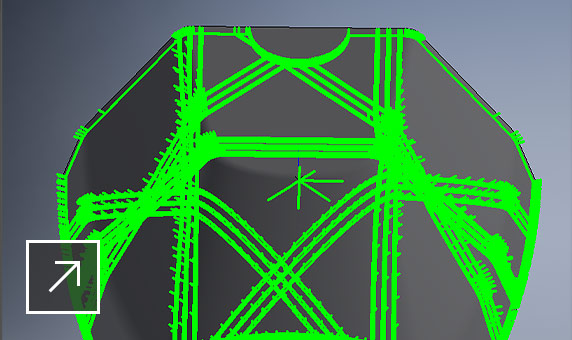
Automated fiber placement
ULTIMATE
Program and edit toolpaths. Simulate machine motion and material deposition.
-
Flat pattern export for TruNest
STANDARD
Export flat patterns directly to TruNest to ensure design data flows into manufacturing.
-
Automatic thickness compensation
ULTIMATE
Compare as-designed to as-manufactured parts and automatically compensate for out-of-tolerance areas.


