
HOUSEHOLD APPLIANCE MANUFACTURING AND DESIGN
Innovation is key in household appliance manufacturing and design
Innovation is key in household appliance manufacturing and design
Household appliances are standard conveniences but are constantly improving. To stay ahead in the market, appliance manufacturers can achieve efficiencies, foster innovation, and improve sustainability with advanced design and engineering software.
 Product designers use advanced software to create, visualize, test, and produce modern household appliances.
What is household appliance design and manufacturing?
What is household appliance design and manufacturing?
Household appliance design and manufacturing is a field dating back to the early 20th century, and it has seen a steady stream of innovations that make household appliances more functional, more energy efficient, and more connected as part of the Internet of Things (IoT). By using advanced software to design their products, assembly lines, and factories, household appliance manufacturers can achieve the efficiencies needed to stay competitive in the future.
Household appliance design and manufacturing is a field dating back to the early 20th century, and it has seen a steady stream of innovations that make household appliances more functional, more energy efficient, and more connected as part of the Internet of Things (IoT). By using advanced software to design their products, assembly lines, and factories, household appliance manufacturers can achieve the efficiencies needed to stay competitive in the future.
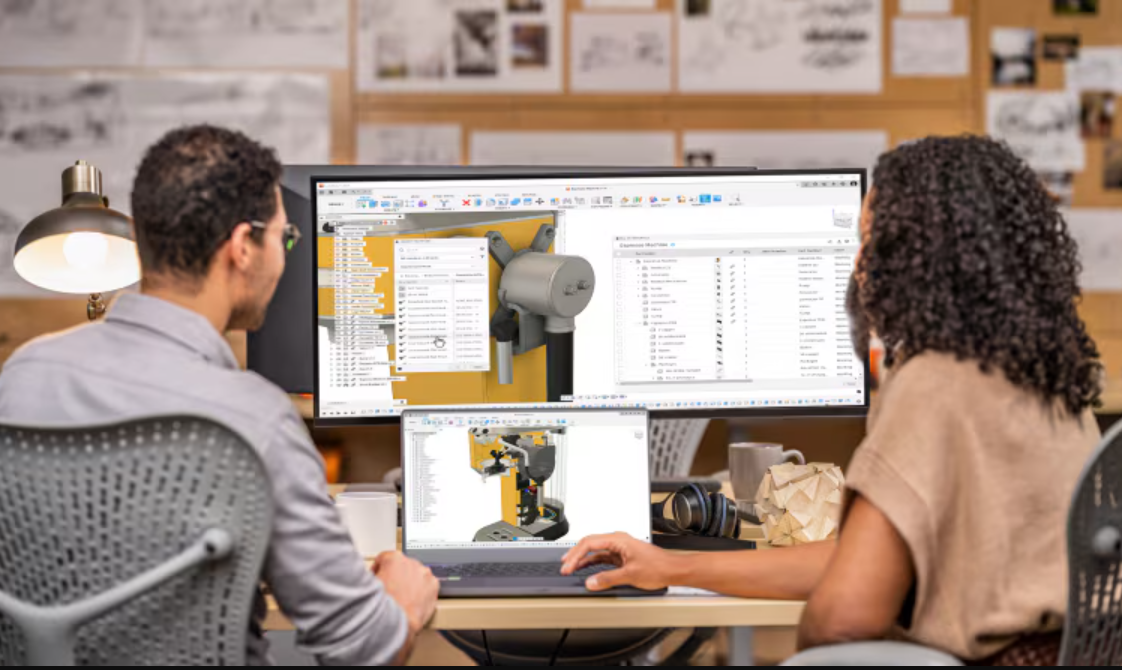
 CAD software like Autodesk Fusion enables efficient and innovative household appliance design.
The design process for household appliances
The design process for household appliances
Household appliances have come a long way since many of them—such as refrigerators, electric stoves, and dishwashers—were first developed in the 19th century and commercially produced in the early 20th century. Very early household appliances had basic functionality and were—by today’s standards—comically clunky, such as the 150 kg Siemens “dust suction pump” (vacuum cleaner) from 1906. Still, they were also, without a doubt, very innovative for their time. And they resulted from early design processes that required everything to be done manually, from hand-drawn sketches to physical models and prototypes.
Since the advent of computer-aided design (CAD) software a few decades ago, household appliance design has become ever more flexible, efficient, and innovative. Today, CAD software for appliance design and other product design has become extremely sophisticated and can include simulation technology for testing appliance designs virtually, as well as computer-aided manufacturing (CAM) functionality.
All this technological progress has allowed household appliance designers and engineers to be more precise in their work and to iterate faster on their creations. But the steps of household appliance development have remained mostly in place. Appliance developers still begin with conducting market research such as surveys and focus groups, and analyzing trends and the competition to understand the desires of their target customers. Teams then take these insights into the ideation stage which may include brainstorming, mind mapping, and copious product sketching to explore new appliance possibilities.
Next, the designers start to refine the appliance’s aesthetics, features, and manufacturability by designing detailed and more precise 3D models in CAD software. Some CAD software, such as Autodesk Fusion, also offers virtual prototyping that puts product designs through simulation tests so designers and engineers can iterate in the digital realm. When it’s time to create physical prototypes, Fusion also has CAM features for setting up making on CNC machines, 3D printers, and other machines. Additional rounds of iterations put physical prototypes through stress tests, functional tests, and user tests before incorporating feedback and finalizing the design, materials, and manufacturing processes for production.
Household appliances have come a long way since many of them—such as refrigerators, electric stoves, and dishwashers—were first developed in the 19th century and commercially produced in the early 20th century. Very early household appliances had basic functionality and were—by today’s standards—comically clunky, such as the 150 kg Siemens “dust suction pump” (vacuum cleaner) from 1906. Still, they were also, without a doubt, very innovative for their time. And they resulted from early design processes that required everything to be done manually, from hand-drawn sketches to physical models and prototypes.
Since the advent of computer-aided design (CAD) software a few decades ago, household appliance design has become ever more flexible, efficient, and innovative. Today, CAD software for appliance design and other product design has become extremely sophisticated and can include simulation technology for testing appliance designs virtually, as well as computer-aided manufacturing (CAM) functionality.
All this technological progress has allowed household appliance designers and engineers to be more precise in their work and to iterate faster on their creations. But the steps of household appliance development have remained mostly in place. Appliance developers still begin with conducting market research such as surveys and focus groups, and analyzing trends and the competition to understand the desires of their target customers. Teams then take these insights into the ideation stage which may include brainstorming, mind mapping, and copious product sketching to explore new appliance possibilities.
Next, the designers start to refine the appliance’s aesthetics, features, and manufacturability by designing detailed and more precise 3D models in CAD software. Some CAD software, such as Autodesk Fusion, also offers virtual prototyping that puts product designs through simulation tests so designers and engineers can iterate in the digital realm. When it’s time to create physical prototypes, Fusion also has CAM features for setting up making on CNC machines, 3D printers, and other machines. Additional rounds of iterations put physical prototypes through stress tests, functional tests, and user tests before incorporating feedback and finalizing the design, materials, and manufacturing processes for production.
 Modern household appliance manufacturing employs robotics and automation technologies.
The manufacturing process for household appliances
The manufacturing process for household appliances
As with the design process, the manufacturing process for household appliances has progressed greatly from the mostly manual, labor-intensive product assembly and handcrafting of components used in the early days. Today, household appliance manufacturers use modern advanced manufacturing that leans on robotics and other types of automation, as well as smart factories that mine continuously collected data streams to refine quality control and quality assurance systems.
The sourcing of common materials used in household appliances, such as various metals, plastics, glass, rubber, and ceramics, still requires establishing solid relationships with reliable materials suppliers. However, manufacturing execution systems (MES) software like Fusion Operations helps companies with materials scheduling and inventory management (material requirements planning) so they can adapt quickly to any supplier changes.
Common production techniques for appliance manufacturing, such as injection molding and metal stamping, have existed for decades, but in a modern, digital factory those techniques are augmented by automation and/or robotics technology, and supplemented by newer, computer-controlled processes, like additive manufacturing, subtractive manufacturing CNC machines, and hybrid additive/subtractive techniques.
Quality control (the inspection of parts and products for defects at different stages of production) and quality assurance (the prevention of defects from monitoring and refining manufacturing processes) have both been improved by the amount of data that can be collected and analyzed along the assembly line of a digital factory. That type of data-based process refinement is important for household appliance manufacturing as modern smart appliances have joined the Internet of Things (IoT) by adding features like network connectivity, remote control, automated functions, smart energy efficiency, and more.
As with the design process, the manufacturing process for household appliances has progressed greatly from the mostly manual, labor-intensive product assembly and handcrafting of components used in the early days. Today, household appliance manufacturers use modern advanced manufacturing that leans on robotics and other types of automation, as well as smart factories that mine continuously collected data streams to refine quality control and quality assurance systems.
The sourcing of common materials used in household appliances, such as various metals, plastics, glass, rubber, and ceramics, still requires establishing solid relationships with reliable materials suppliers. However, manufacturing execution systems (MES) software like Fusion Operations helps companies with materials scheduling and inventory management (material requirements planning) so they can adapt quickly to any supplier changes.
Common production techniques for appliance manufacturing, such as injection molding and metal stamping, have existed for decades, but in a modern, digital factory those techniques are augmented by automation and/or robotics technology, and supplemented by newer, computer-controlled processes, like additive manufacturing, subtractive manufacturing CNC machines, and hybrid additive/subtractive techniques.
Quality control (the inspection of parts and products for defects at different stages of production) and quality assurance (the prevention of defects from monitoring and refining manufacturing processes) have both been improved by the amount of data that can be collected and analyzed along the assembly line of a digital factory. That type of data-based process refinement is important for household appliance manufacturing as modern smart appliances have joined the Internet of Things (IoT) by adding features like network connectivity, remote control, automated functions, smart energy efficiency, and more.
Benefits of software for household appliance design and manufacturing
Using Autodesk CAD and CAM software for household appliance design and manufacturing can speed up the design and make processes while saving costs, improving quality, and more:
Using Autodesk CAD and CAM software for household appliance design and manufacturing can speed up the design and make processes while saving costs, improving quality, and more:
Reduce costs
When using CAD product design software for appliances, designers can catch flaws early in the product development process, reducing the need for multiple physical prototypes, as well as finding ways to reduce material use or find lower-cost material options.
When using CAD product design software for appliances, designers can catch flaws early in the product development process, reducing the need for multiple physical prototypes, as well as finding ways to reduce material use or find lower-cost material options.
Go to market faster
Equipped with CAD consumer products software, appliance designers can quickly revise and iterate on their designs with more streamlined workflows across product development stages. Autodesk software includes intelligent systems for automating tedious workflows and continually adds new options so designers and engineers can accelerate product development.
Equipped with CAD consumer products software, appliance designers can quickly revise and iterate on their designs with more streamlined workflows across product development stages. Autodesk software includes intelligent systems for automating tedious workflows and continually adds new options so designers and engineers can accelerate product development.
Collaborate effectively
Cloud-connected CAD software from Autodesk centralizes all design data in a single source of truth so that household appliance design and engineering teams can better integrate their work from any location and effectively make better decisions based on information updated in real time.
Cloud-connected CAD software from Autodesk centralizes all design data in a single source of truth so that household appliance design and engineering teams can better integrate their work from any location and effectively make better decisions based on information updated in real time.
Better product quality
Advanced CAD software for appliances is highly precise and accurate in its modeling, increasing part and product reliability by reducing assembly and functionality errors.
Advanced CAD software for appliances is highly precise and accurate in its modeling, increasing part and product reliability by reducing assembly and functionality errors.
CAD and CAM all in one
Appliance designers using Autodesk Fusion get an integrated CAD and CAM solution in one place. They can use Fusion’s 3D models directly to set up fabrication on machines like 3D printers and CNC machines, seamlessly moving from design to rapid prototyping, and saving time with features like automatic toolpaths and automatic data translation.
Appliance designers using Autodesk Fusion get an integrated CAD and CAM solution in one place. They can use Fusion’s 3D models directly to set up fabrication on machines like 3D printers and CNC machines, seamlessly moving from design to rapid prototyping, and saving time with features like automatic toolpaths and automatic data translation.
Simulation and visualization
The simulation and visualization in Autodesk CAD software grants powerful capabilities and reduces the need for physical prototypes and models. Simulation provides effective virtual testing to evaluate 3D models for performance before moving to prototyping. Detailed 3D visualization provides comprehensive product views that more accurately convey design intent for the form and function of household appliances.
The simulation and visualization in Autodesk CAD software grants powerful capabilities and reduces the need for physical prototypes and models. Simulation provides effective virtual testing to evaluate 3D models for performance before moving to prototyping. Detailed 3D visualization provides comprehensive product views that more accurately convey design intent for the form and function of household appliances.
 Smart appliances connecting through the IoT allow homeowners to automate home routines and monitor appliances remotely.
Future trends in appliance manufacturing and design
Future trends in appliance manufacturing and design
The future of household appliance design and manufacturing can already be seen in the most innovative present-day trends. For example, smart appliances that optimize for energy efficiency have existed for many years, but sophisticated data analysis and processing make today’s smart appliances much more intelligent. They can adjust cycles of energy use based on the owner’s usage patterns to save energy overall. More smart appliances are also joining the IoT and becoming part of a larger connected home network, allowing appliances to be controlled remotely and be part of home automation routines. With their various sensors and networking abilities, smart appliances can offer features like remote-controlled oven preheating or a refrigerator that alerts the user when it’s low on certain items.
More household appliance designers are also designing for disassembly. This added emphasis on appliances’ end-of-life indicates the growing effort to make appliances and their components more reusable and recyclable. The eventual goal is to reach full recyclability and make appliances part of a sustainable, circular economy.
Household appliance manufacturing has also become more focused on sustainability by adding more environmentally friendly materials, such as recycled metals, plastics, and other materials, and by adding more biodegradable materials as well. Appliance manufacturers are making production more energy-efficient and less wasteful by using more renewable energy and optimizing processes through continuous data analysis.
The future of household appliance design and manufacturing can already be seen in the most innovative present-day trends. For example, smart appliances that optimize for energy efficiency have existed for many years, but sophisticated data analysis and processing make today’s smart appliances much more intelligent. They can adjust cycles of energy use based on the owner’s usage patterns to save energy overall. More smart appliances are also joining the IoT and becoming part of a larger connected home network, allowing appliances to be controlled remotely and be part of home automation routines. With their various sensors and networking abilities, smart appliances can offer features like remote-controlled oven preheating or a refrigerator that alerts the user when it’s low on certain items.
More household appliance designers are also designing for disassembly. This added emphasis on appliances’ end-of-life indicates the growing effort to make appliances and their components more reusable and recyclable. The eventual goal is to reach full recyclability and make appliances part of a sustainable, circular economy.
Household appliance manufacturing has also become more focused on sustainability by adding more environmentally friendly materials, such as recycled metals, plastics, and other materials, and by adding more biodegradable materials as well. Appliance manufacturers are making production more energy-efficient and less wasteful by using more renewable energy and optimizing processes through continuous data analysis.
NEW OFFER - Flex now starting at {{price.FLEXACCESS.1year}}
Autodesk Flex lets you prepay with tokens for on-demand access to Fusion and advanced design and manufacturing capabilities, charged only when tools are in use. It’s ideal for project-based work or occasional access to specialized workflows. Combine Flex tokens with Fusion to:
Access advanced product development workflows on demand
Use high-value capabilities only when needed
Scale access for peak workloads
Autodesk software for household appliance manufacturing and design
Household appliance manufacturing and design customer success stories

Expanding the product line in virtual space
Expanding the product line in virtual space
To accelerate its design process and lower costs, this innovative and diverse household appliance manufacturer turned to Autodesk VRED. The move enabled the creation of realistic virtual reality (VR) mock-ups and immersive VR presentations, saving time and costs by reducing the need for physical prototypes and in-person presentations.
To accelerate its design process and lower costs, this innovative and diverse household appliance manufacturer turned to Autodesk VRED. The move enabled the creation of realistic virtual reality (VR) mock-ups and immersive VR presentations, saving time and costs by reducing the need for physical prototypes and in-person presentations.

An inventive appliance keeps food cool off the grid
An inventive appliance keeps food cool off the grid
With help from the Autodesk Foundation and Fusion software, this social venture utilized digital prototyping to develop the EasyFreeze100, a 100-liter solar-powered freezer that makes off-grid refrigeration possible in rural Africa.
With help from the Autodesk Foundation and Fusion software, this social venture utilized digital prototyping to develop the EasyFreeze100, a 100-liter solar-powered freezer that makes off-grid refrigeration possible in rural Africa.

Building a better appliance factory
Building a better appliance factory
To meet the exploding demand for its heat pumps, this heating and air conditioning specialist used digital factory planning and Autodesk software to build a smart factory that harnesses the efficiency of technologies like BIM, digital twins, and XR—all with the goal of increasing production while achieving carbon neutrality.
To meet the exploding demand for its heat pumps, this heating and air conditioning specialist used digital factory planning and Autodesk software to build a smart factory that harnesses the efficiency of technologies like BIM, digital twins, and XR—all with the goal of increasing production while achieving carbon neutrality.
Household appliance manufacturing and design resources
Top-down modeling for household appliances and more
Learn about software for top-down modeling, a CAD approach that
begins by conveying design intent for an overall assembly before teams
start working on specific subsystems. Top-down modeling particularly
suits complex products such as household appliances, vehicles, and other
electronics and machines.
Learn about software for top-down modeling, a CAD approach that begins by conveying design intent for an overall assembly before teams start working on specific subsystems. Top-down modeling particularly suits complex products such as household appliances, vehicles, and other electronics and machines.
Energy-efficient design and energy effectiveness
Learn more about household appliance design for energy efficiency. This article and video discuss principles of energy efficiency such as how much energy a refrigerator takes to cool food and how much energy can be saved with features like better insulation.
Learn more about household appliance design for energy efficiency. This article and video discuss principles of energy efficiency such as how much energy a refrigerator takes to cool food and how much energy can be saved with features like better insulation.
Is the future of manufacturing in microfactories?
This extensive look at microfactories singles out GE Appliances’ FirstBuild, a microfactory that rapidly conceptualizes, builds, and brings innovative appliances to market to gauge early demand.
This extensive look at microfactories singles out GE Appliances’ FirstBuild, a microfactory that rapidly conceptualizes, builds, and brings innovative appliances to market to gauge early demand.
Fusion: The future of electronics design and engineering software
Autodesk Fusion helps streamline workflows and optimizes circuit designs for household appliance manufacturers by seamlessly combining PCB and electronics design, mechanical design, simulation, cloud-connected collaboration, and CAM machining.
Autodesk Fusion helps streamline workflows and optimizes circuit designs for household appliance manufacturers by seamlessly combining PCB and electronics design, mechanical design, simulation, cloud-connected collaboration, and CAM machining.
Engineer Lillian Gilbreth improved modern workplaces and appliances
Meet Lillian Gilbreth, the engineer and psychologist who pioneered concepts in worker-centric workplace conditions. She worked with appliance manufacturers on improving appliance design with her concept of the kitchen “work triangle,” which arranges the sink/dishwasher, range, and refrigerator for efficient use.
Meet Lillian Gilbreth, the engineer and psychologist who pioneered concepts in worker-centric workplace conditions. She worked with appliance manufacturers on improving appliance design with her concept of the kitchen “work triangle,” which arranges the sink/dishwasher, range, and refrigerator for efficient use.
Electrical design software: The AutoCAD Electrical toolset
Get all the info, resources, and tools you need to use Autodesk AutoCAD design and drafting software to plan and create electrical components and schematics.
Get all the info, resources, and tools you need to use Autodesk AutoCAD design and drafting software to plan and create electrical components and schematics.
Frequently asked questions (FAQ) on household appliance manufacturing and design
How does CAD software benefit the design process?
Using CAD software benefits the design process of household appliances—and all kinds of other products—in numerous ways, such as the ability to quickly create, modify, and optimize 3D models of the highest precision and accuracy.
CAD software may offer product designers high-end visualization features, as well as simulations that put product designs through virtual testing before moving to physical prototyping. This can help catch design flaws early in the process, saving prototyping costs by correcting flaws before manufacturing. CAD software like Autodesk Fusion makes it easy to collaborate with others remotely due to real-time cloud connectivity. And Fusion’s integrated CAM features enable prepping for manufacturing on CNC machines, 3D printers, and other machines.
What are common materials used in household appliances?
There are many common materials used in household appliances for their specific properties. Metals like stainless steel and aluminum are used for their durability and resistance to corrosion. Different types of plastics are used for strength combined with flexibility and resistance to impacts or chemicals.
Glass and ceramics both offer high heat resistance. Rubber is popular for gaskets, hoses, and other areas where an air- and water-tight seal is needed. Composites, such as fiberglass, are chosen for their combination of strength and light weight.
How do smart appliances differ from traditional ones?
Smart appliances differ from traditional ones in many ways. For starters, smart appliances are usually IoT devices connected to the Internet, which lets them communicate with other systems and be controlled remotely by the user from a smartphone or by a connected home system that shuts appliances off when the user leaves the house.
Also, smart appliances can automate tasks, like adjusting settings for energy efficiency or starting a cycle when energy rates are lower. They have software that can be updated over the air, granting new features or performance improvements. Other smart features include maintenance alerts and voice control.
How does software help in quality assurance?
Consumer products software helps improve the quality assurance (QA) of household appliances and other goods in many ways. For example, software can automate the repetitive processes of stress tests and other types of tests to mitigate human error. Virtual testing can occur within simulation software before manufacturing prototypes or final designs.
QA software can also collect and analyze different data sets throughout the product lifecycle, such as identifying patterns and anomalies that could cause problems during manufacturing, analyzing customer feedback to find areas for improvement, and gathering IoT sensor data to monitor the performance of a device’s functionality.