
3D MANUFACTURING
3D manufacturing: From digital design to the production line
3D manufacturing: From digital design to the production line
3D manufacturing expands and augments digital design, enabling it across the entire manufacturing workflow.
 A man holding a control panel kneels next to a large 3D printer
What is 3D manufacturing?
3D manufacturing is the art and science of building something with 3D digital design and production at every step, from the first concept to the final result off the production line.
 Students and teachers work with Fusion 360 at the CNC lab at Diablo Valley College in Pleasant Hill, California
The 3D manufacturing process
3D manufacturing technology starts with digitally designing a product or object in 3D manufacturing software. The program acts as the single source of truth for the entire manufacturing process. As engineers and designers iterate and finesse the design, it connects with assembly-line devices such as 3D printers to keep the process on track and give manufacturers the freedom to experiment.
For example, when a designer sends a design to a 3D printer, the instructions for applying layers come directly from the 3D model in a CAD-style software platform. Build-preparation software separates the 3D model into layers the device will apply to the build. The data effectively comprises digital coordinates sent to a print head, nozzle, or extruder.
The data has come directly from the 3D representation of the design, which affects every part of the manufacturing process.
Traditional manufacturing that uses lathes or mills is a subtractive process, gradually removing material from a piece of unformed wood, metal, plastic, and so forth to arrive at the intended design.
Incorporating design changes is complex, static, and expensive when using traditional subtractive processes. In contrast, 3D manufacturing can produce a new object every time. It’s deployable on any scale necessary to make changes, or it can quickly prototype or test changes to projects outside primary workflows.
3D manufacturing software has found a natural home in several industries and sectors, including automotive, aerospace, defense, medical, and more.
3D manufacturing software also makes process artifacts cheaper, reducing overall costs for industries like oil and gas or mechanical engineering. And because it’s scalable down to a single product (or countless physical variations of the same product), it offers unique customization properties perfect for the health care and medical device sectors.
Types of 3D manufacturing
Several types of additive manufacturing, or 3D printing, are used in manufacturing, including:
Several types of additive manufacturing, or 3D printing, are used in manufacturing, including:
Extrusion
A piece of thermoplastic thread is unspooled from a coil and fed through an extruder—an instrument like the printhead on a consumer inkjet printer—that heats the material for application onto the structure, one flat layer at a time.
A piece of thermoplastic thread is unspooled from a coil and fed through an extruder—an instrument like the printhead on a consumer inkjet printer—that heats the material for application onto the structure, one flat layer at a time.
Vat polymerization
With similar applications and outputs as extrusion methods, vat polymerization uses liquid resins heated using a concentrated ultraviolet or laser light that cures the material into hard plastic where it hits the resin and forms the next layer of the structure.
With similar applications and outputs as extrusion methods, vat polymerization uses liquid resins heated using a concentrated ultraviolet or laser light that cures the material into hard plastic where it hits the resin and forms the next layer of the structure.
Powder bed fusion
Powder bed fusion applies heat or light to solidify a powdered material into the end product. This allows for more detailed geometries that are more accurate to complex 3D models.
Powder bed fusion applies heat or light to solidify a powdered material into the end product. This allows for more detailed geometries that are more accurate to complex 3D models.
Material jetting
As the name suggests, material jetting “shoots” material onto the build surface or previous layer directly through a nozzle. It’s one of the few 3D manufacturing processes that can apply different materials concurrently, though it is limited by the material inputs possible and the strength of the final material.
As the name suggests, material jetting “shoots” material onto the build surface or previous layer directly through a nozzle. It’s one of the few 3D manufacturing processes that can apply different materials concurrently, though it is limited by the material inputs possible and the strength of the final material.
Binder jetting
Binder jetting also uses raw material in a powdered form. However, instead of applying the powder to the object through jetting or curing, it is spread onto the object, and a liquid bonding agent added to each layer ensures the best possible adhesion with the next layer.
Binder jetting also uses raw material in a powdered form. However, instead of applying the powder to the object through jetting or curing, it is spread onto the object, and a liquid bonding agent added to each layer ensures the best possible adhesion with the next layer.
Directed energy deposition
Directed energy deposition is used mainly for metals and has the most in common with a traditional welding process. Metal in powdered or wire form is deposited on the structure and fused into a solid form using a high-energy source of power, such as a laser.
Directed energy deposition is used mainly for metals and has the most in common with a traditional welding process. Metal in powdered or wire form is deposited on the structure and fused into a solid form using a high-energy source of power, such as a laser.
NEW OFFER - Flex now starting at {{price.FLEXACCESS.1year}}
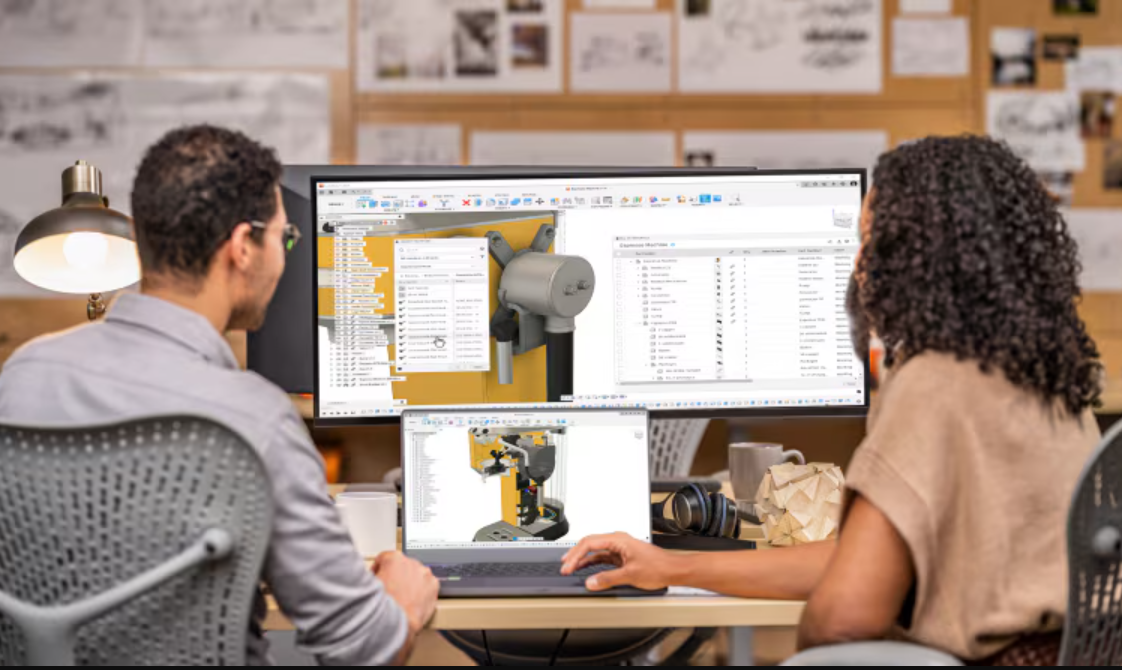
Autodesk Flex lets you prepay with tokens for on-demand access to Fusion and advanced design and manufacturing capabilities, charged only when tools are in use. It’s ideal for project-based work or occasional access to specialized workflows. Combine Flex tokens with Fusion to:
Access advanced product development workflows on demand
Use high-value capabilities only when needed
Scale access for peak workloads
Autodesk software for 3D manufacturing
Businesses creating with 3D manufacturing

Transforming the housing landscape
Transforming the housing landscape
Habitat for Humanity 3D-printed houses as a prototype for future affordable housing initiatives. With the power of 3D manufacturing, these homes can be constructed with unprecedented speed and efficiency.
Habitat for Humanity 3D-printed houses as a prototype for future affordable housing initiatives. With the power of 3D manufacturing, these homes can be constructed with unprecedented speed and efficiency.
Discovering sustainable construction processes
Discovering sustainable construction processes
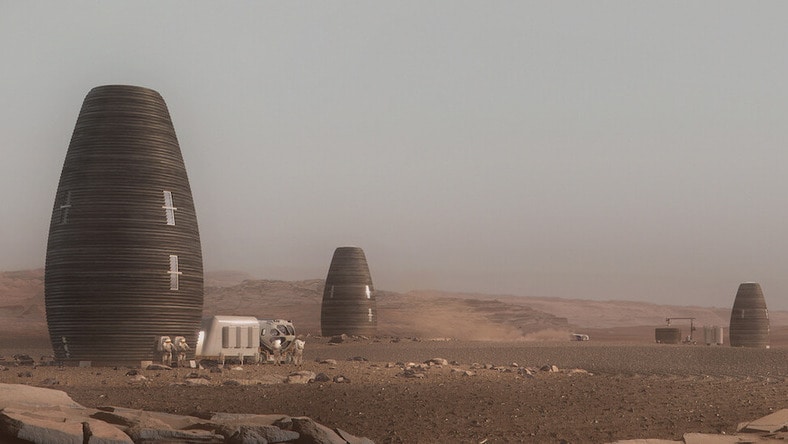
Using local materials to build habitats on other planets has long been one aspiration of extraplanetary exploration. Now, a company making 3D-manufactured structures might have cracked the code.
Using local materials to build habitats on other planets has long been one aspiration of extraplanetary exploration. Now, a company making 3D-manufactured structures might have cracked the code.
Accelerating the production cycle
Accelerating the production cycle
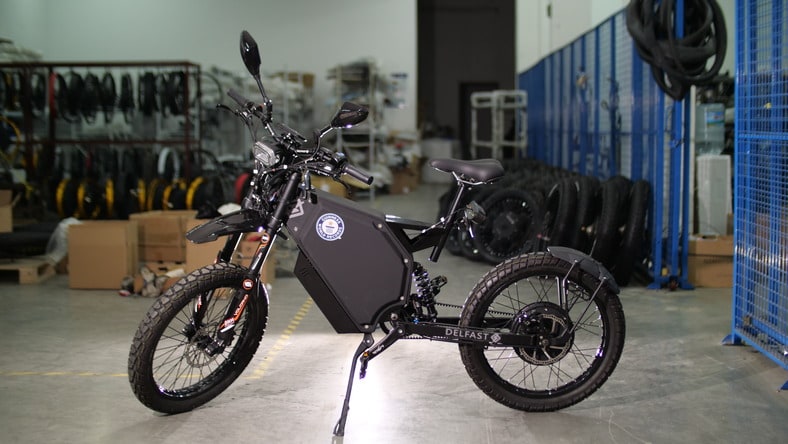
Harnessing 3D manufacturing software, Delfast revolutionized its bicycle production process by virtually eliminating the need for prototyping. Through simulations, it tested bikes for safety and reduced its production cycle from one year to three months.
Harnessing 3D manufacturing software, Delfast revolutionized its bicycle production process by virtually eliminating the need for prototyping. Through simulations, it tested bikes for safety and reduced its production cycle from one year to three months.
3D manufacturing resources
3D manufacturing in Autodesk software
This Autodesk University session shows how to use Fusion 360 to take a design from initial concept through to a 3D-manufactured prototype.
This Autodesk University session shows how to use Fusion 360 to take a design from initial concept through to a 3D-manufactured prototype.
Updating machinery with 3D manufacturing
Retrofitting interfaces for existing devices is within reach for a novice using this project. Simply 3D-scan the tool, use 3D design to remodel the interface (like a lamp switch), and produce the necessary parts using 3D printing.
Retrofitting interfaces for existing devices is within reach for a novice using this project. Simply 3D-scan the tool, use 3D design to remodel the interface (like a lamp switch), and produce the necessary parts using 3D printing.
The manufacturing paradigm shift
3D manufacturing is accelerating across industries globally. See what changes are coming and how manufacturing companies can be ready for them.
3D manufacturing is accelerating across industries globally. See what changes are coming and how manufacturing companies can be ready for them.
Frequently asked questions (FAQ) on 3D manufacturing
Is 3D printing considered manufacturing?
Absolutely—and in many ways, it is also a better manufacturing process than many traditional methods.
3D manufacturing will open up possibilities in small runs, democratize making in artisanal manufacturing businesses, and enable mass product customization and rapid prototyping that would be impossible using traditional manufacturing methods.
What is the difference between 3D printing and 3D manufacturing?
3D printing refers to the production of a geometry using 3D manufacturing software and an additive manufacturing device or 3D printer.
3D manufacturing has a further reach and refers to using digital manufacturing platforms throughout the entire process, from concepting and design to production of the physical object.
Which industries use 3D manufacturing?
Manufacturing industries in which production time, cost, performance, or any combination are critically important have already widely adopted 3D manufacturing.
Aerospace and automotive use it to make parts and components lighter, better performing, or more sustainably produced.
Engineering, oil, gas, and mining exploration and machinery design use 3D manufacturing to make changes to processes or products inexpensively and quickly, without disruption.
Finally, industries that benefit from custom design, like fashion and medical devices, can reach more users more cost-effectively with 3D manufacturing because designers can change an object incrementally for countless iterations.